Registration with NIMASA as a Shipping Company
Registration with NIMASA as a Shipping Company is a fundamental requirement for businesses seeking to operate legitimately within Nigeria’s maritime sector. The Nigerian Maritime Administration and Safety Agency (NIMASA) serves as the country’s apex regulatory authority for all maritime activities, ensuring that only qualified and properly structured entities participate in the nation’s thriving shipping industry.
The Nigerian Maritime Administration and Safety Agency (NIMASA) is the apex regulatory and promotional maritime agency, created from the merger of National Maritime Authority and Joint Maritime Labour Industrial Council on August 1, 2006. As the statutory authority for ship registration under the Nigerian flag, NIMASA plays a crucial role in maintaining standards and promoting best practices across the maritime value chain.
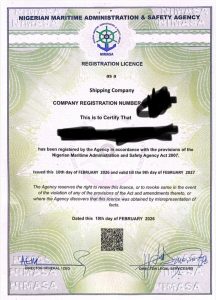
Registration with NIMASA
Understanding the Scope of NIMASA Registration
NIMASA registration is mandatory for all entities engaged in shipping operations within Nigerian waters. This includes companies involved in cargo transportation, vessel ownership, ship management, offshore support services, and maritime logistics. Registration grants the vessel Nigerian nationality, enabling it to fly the national flag and benefit from legal protection and economic incentives.
The certificate issued by NIMASA serves multiple purposes beyond mere regulatory compliance. It establishes your company’s legal standing to enter into shipping contracts, access Nigerian ports, participate in cabotage trade, and engage with international maritime partners. For companies in the offshore oil and gas exploration sector, NIMASA registration is particularly critical as it forms part of the broader regulatory framework governing operations in Nigerian territorial waters.
Eligibility and Corporate Requirements
Not every business entity qualifies for NIMASA registration. Specifically, eligible owners include Nigerian citizens, bodies corporate established under and subject to Nigerian laws with their principal place of business in Nigeria, and such other persons as the Minister of Transport may prescribe through regulations.
In addition, the corporate structure of applicant companies must meet specific threshold requirements. Your company must include maritime-related objects in its MEMART and maintain a minimum share capital of ₦25 million. Importantly, this capital requirement is not merely nominal; NIMASA verifies that the stated share capital has been properly allotted and reflected in the company’s statutory filings with the Corporate Affairs Commission (CAC).
Consequently, companies whose current share capital falls below this threshold must undertake capital restructuring before submitting their applications. Furthermore, the Memorandum and Articles of Association must explicitly reference shipping, maritime operations, or related activities. NIMASA carefully reviews CAC registration records; therefore, if your MEMART states “general trading” instead of “maritime logistics,” your application is likely to be rejected.
The Application Framework
The registration process involves submitting a formal application accompanied by comprehensive documentation. First, applicants must complete NIMASA’s prescribed application forms, which capture detailed information about the company’s structure, ownership, financial standing, and intended scope of maritime operations.
Additionally, the registration fee structure includes payment for application forms and registration charges through the Remita platform. Once payment is completed, the system generates a Remita Retrieval Reference (RRR) number, which serves as proof of payment and facilitates document collection from NIMASA offices.
Moreover, the documentation requirements are extensive and must demonstrate corporate legitimacy, financial capacity, and regulatory compliance. Companies must provide current incorporation documents properly certified by the CAC. Likewise, financial documentation must include evidence of adequate capitalization and banking relationships. Tax compliance documentation must also be current and reflect good standing with the relevant revenue authorities.
The Inspection Component
A distinguishing feature of NIMASA registration is the mandatory facility inspection. In particular, NIMASA conducts a physical inspection as part of the application process. This inspection goes beyond superficial observation; instead, NIMASA officials carry out detailed assessments to verify that applicant companies possess the physical infrastructure, operational capacity, and management systems necessary for maritime operations.
During this process, inspectors evaluate factors such as office facilities, communication systems, safety equipment, record-keeping capabilities, and evidence of technical competence. As a result, companies must demonstrate readiness to commence operations in compliance with international maritime safety standards and Nigerian regulatory requirements.
Processing Timeline and Approval
Processing time typically ranges from 6–10 weeks, depending on the applicant’s readiness and the license type. However, this timeline assumes complete and accurate documentation, satisfactory inspection results, and the absence of issues requiring additional clarification.
Applications pass through multiple departments. Therefore, missing or outdated documents frequently cause significant delays. For example, expired tax clearance certificates or incomplete filings may suspend the review process until updated versions are submitted. In addition, the multi-departmental review process involves legal verification, financial assessment, technical evaluation, and final approval stages. Any deficiency identified at any stage can halt progress until resolved.
Beyond NIMASA: Complementary Registrations
Although NIMASA registration is fundamental, it represents only one component of the broader regulatory framework governing maritime operations in Nigeria. Consequently, companies must secure additional registrations to operate comprehensively.
Nigerian Ports Authority (NPA) Registration
To operate within Nigerian ports, shipping companies must also register with the NPA. Registration requirements and fees vary depending on the port location and operational scope. As such, this registration establishes the company’s legal right to access and utilize port facilities across Nigeria’s maritime infrastructure.
SCUML Registration
Similarly, the Economic and Financial Crimes Commission (EFCC) requires all shipping companies to register with the Special Control Unit Against Money Laundering (SCUML). This registration is essential for opening and operating a corporate bank account. Furthermore, it ensures compliance with anti-money laundering regulations and strengthens banking relationships necessary for maritime business operations.
The sequencing and coordination of these registrations require careful planning. Otherwise, inconsistencies across regulatory filings may create unnecessary complications.
Common Application Challenges
Several factors commonly complicate NIMASA registration applications. For instance, inadequate share capital documentation frequently triggers rejections where companies cannot demonstrate that the minimum ₦25 million has been properly allotted and paid up. Similarly, misalignment between stated business objectives in incorporation documents and actual maritime activities creates regulatory concerns.
Moreover, expired or outdated supporting documents, particularly tax clearance certificates, can halt processing until renewed copies are provided. At the same time, incomplete facility preparations that fail to meet NIMASA’s operational standards during inspection may result in conditional approvals or outright rejection pending remediation.
The technical nature of maritime regulations means that seemingly minor documentation errors can have disproportionate effects on application outcomes. Therefore, understanding NIMASA’s interpretation of regulatory requirements and aligning submissions accordingly significantly improves the chances of approval.
The Strategic Importance of Proper Registration
NIMASA registration goes beyond basic regulatory compliance; rather, it establishes the foundation for sustainable maritime business operations. NIMASA remains committed to promoting global best practices in maritime service delivery in Nigeria. Accordingly, registered companies benefit from alignment with internationally recognized standards.
Registration also provides access to cabotage opportunities, which reserve domestic coastal trade for Nigerian-flagged vessels. In addition, it enables participation in government maritime contracts and programs designed to strengthen local shipping capacity. International partners and financiers also view NIMASA registration as evidence of legitimacy and operational competence.
For companies operating in competitive maritime sectors, timing is critical. Consequently, delays in securing registration can result in missed contract opportunities, deferred revenue generation, and competitive disadvantages.
Regulatory Evolution and Compliance
Nigeria’s maritime regulatory framework continues to evolve in response to international standards and domestic policy objectives. As a result, NIMASA periodically updates its requirements, introduces new compliance obligations, and refines inspection protocols. Registered companies must therefore remain informed about these developments and adjust their operations accordingly.
Furthermore, post-registration obligations include periodic renewals, updated financial disclosures, and continued adherence to safety and operational standards. NIMASA also retains the authority to conduct follow-up inspections and may suspend or revoke registrations for non-compliance.
Conclusion
Registration with NIMASA as a shipping company represents a critical milestone for any entity seeking to participate in Nigeria’s maritime economy. Although the process demands careful attention to corporate structuring, documentation, financial adequacy, and operational preparedness, these requirements serve the important purpose of ensuring that Nigeria’s maritime sector aligns with international best practices.
Therefore, companies intending to register with NIMASA should allocate sufficient time for preparation, ensure all corporate and financial documentation meets regulatory thresholds, and prepare their facilities to demonstrate operational readiness. Ultimately, understanding the multi-layered nature of the registration process and coordinating all regulatory touchpoints effectively will position applicants for smoother approval and long-term operational success.
For more information about business registration and regulatory compliance services, contact us through any of the provided communication channels.